Río de la Plata on a Plate: Chivito, Asado, and Craft Beer Across Uruguay and Argentina
TL;DR — What to eat across Uruguay and Argentina in one week:
- Salto, Uruguay → start slow with steak criollo and chicken milanesa alongside a cold local beer.
- Colonia del Sacramento, Uruguay → order a chivito al plato (the iconic Uruguayan steak-and-egg plate) and a Bizarra craft beer at sunset.
- La Boca, Buenos Aires, Argentina → sit down for a full Argentine asado with chorizo, morcilla, and tira de asado, washed down with a 473 ml craft APA.
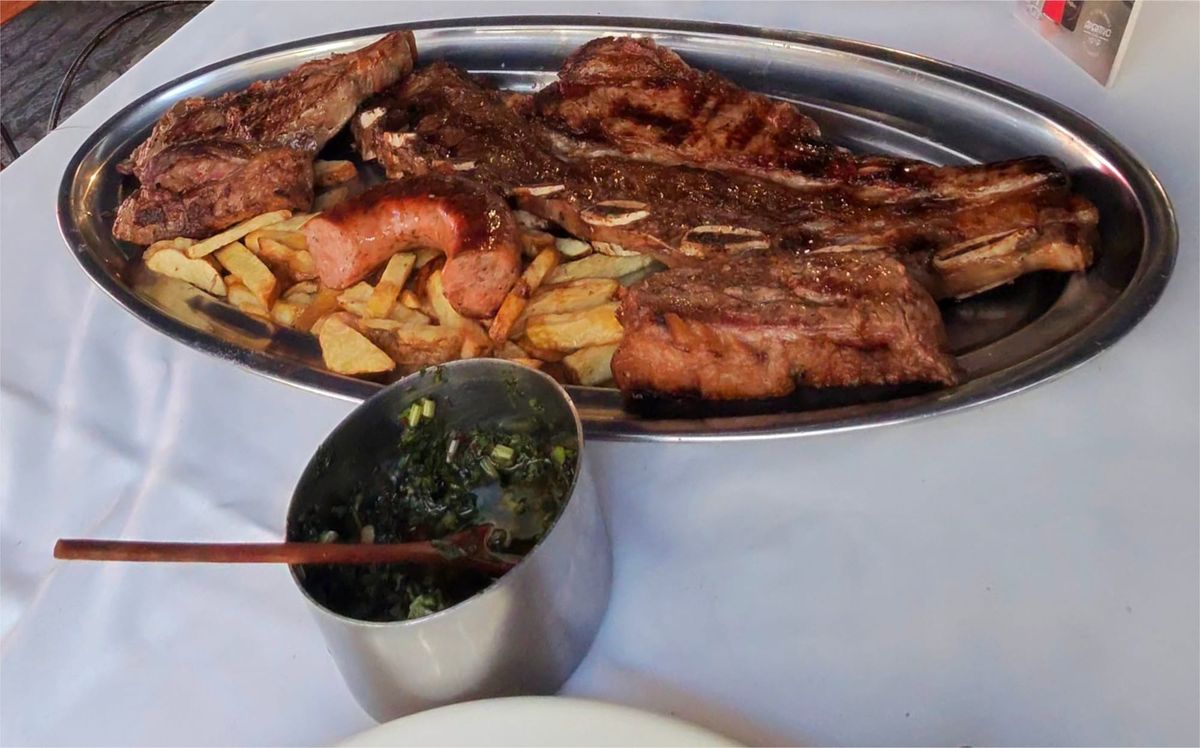
- Mercado del Puerto, Montevideo, Uruguay → finish at La Palenque with a parrillada platter and a pot of chimichurri.
If you only have time for one dish in each country: chivito al plato in Uruguay, asado in Argentina. Bring elastic-waist pants.
Introduction: Why the Río de la Plata Is the Best Eating in South America
There's a moment, somewhere between the second beer and the third cut of meat, when you finally understand the rhythm of this part of the world. It isn't rushed. It isn't dainty. The waiter brings out a cast-iron grill still glowing with embers, sets it down in the middle of your table, and walks away as if he hasn't just handed you a small bonfire to manage with a steak knife. That, more than anything, is what a week of food in Uruguay and Argentina tastes like.
This is the food-and-drink dispatch from a week across four stops — Salto, Colonia del Sacramento, Buenos Aires, and Montevideo — with notes on what to order, what to drink, and what to brace yourself for. If you're planning a trip and trying to figure out what to eat in Uruguay or where to find the best asado in Buenos Aires, this is the on-the-ground answer.
Salto, Uruguay: Steak Criollo, Chicken Milanesa, and the Slow Bar Meal
The first night out in Salto doesn't really begin with food. It begins with a bottle of beer sweating in a tin ice bucket, a wicker basket of toasted bread bits that nobody asked for and everybody finishes, and one of those QR-coded paper menus that locals don't bother looking at because they already know what they want.
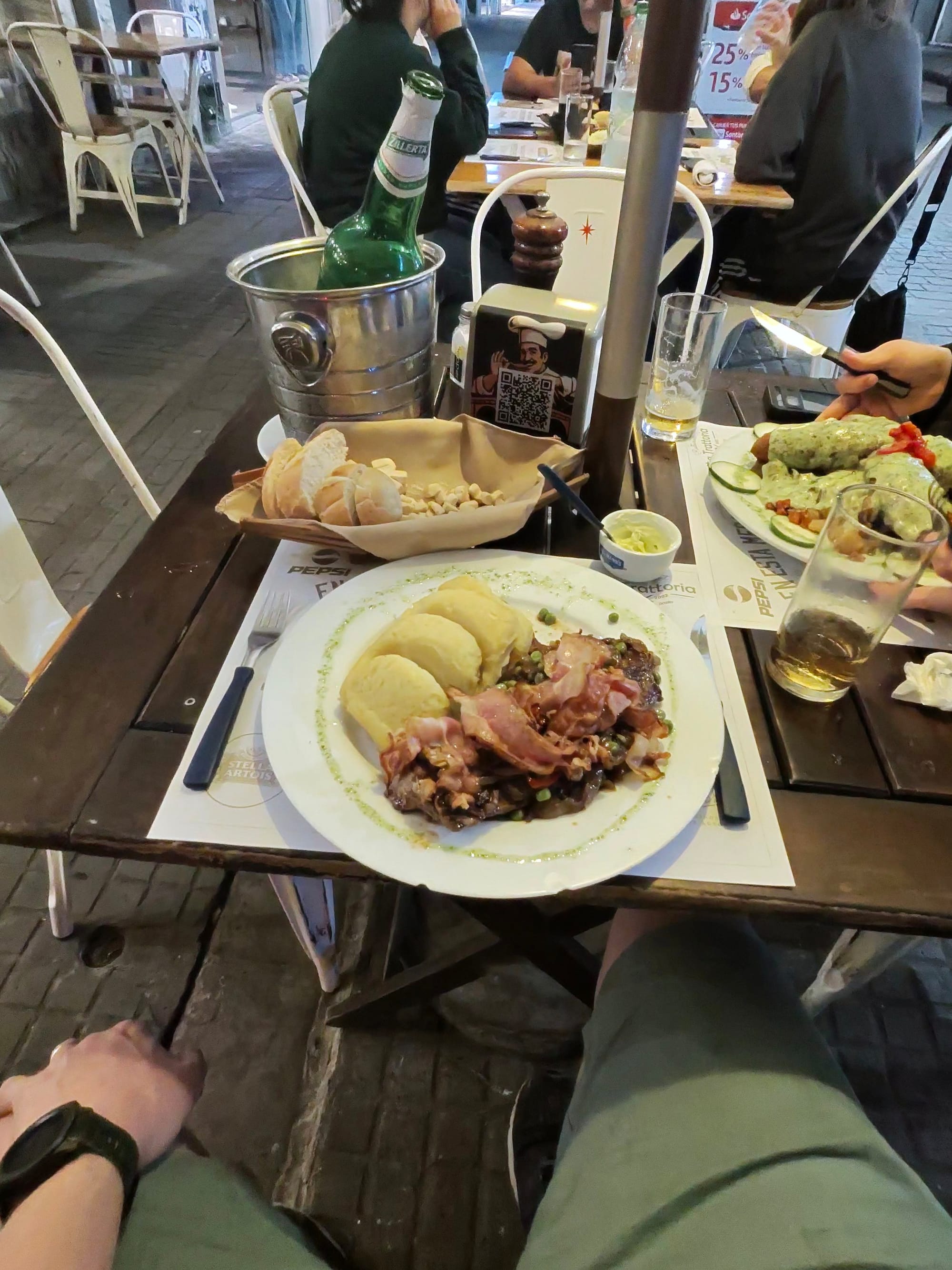
What arrives looks deceptively casual: one big plate doing the work of two — golden rounds of chicken milanesa (the breaded, pan-fried cutlet that South Americans treat like a religion) on one side, and strips of steak criollo in its tomato-onion-pepper sauce on the other, with peas scattered through both for good measure. Bistec a la criolla — steak criollo — is comfort cooking distilled: a thin cut of beef braised in salsa criolla, equal parts tang and char. The milanesa is its lighter sibling, a crisp counterpoint you can keep eating long after you should stop.
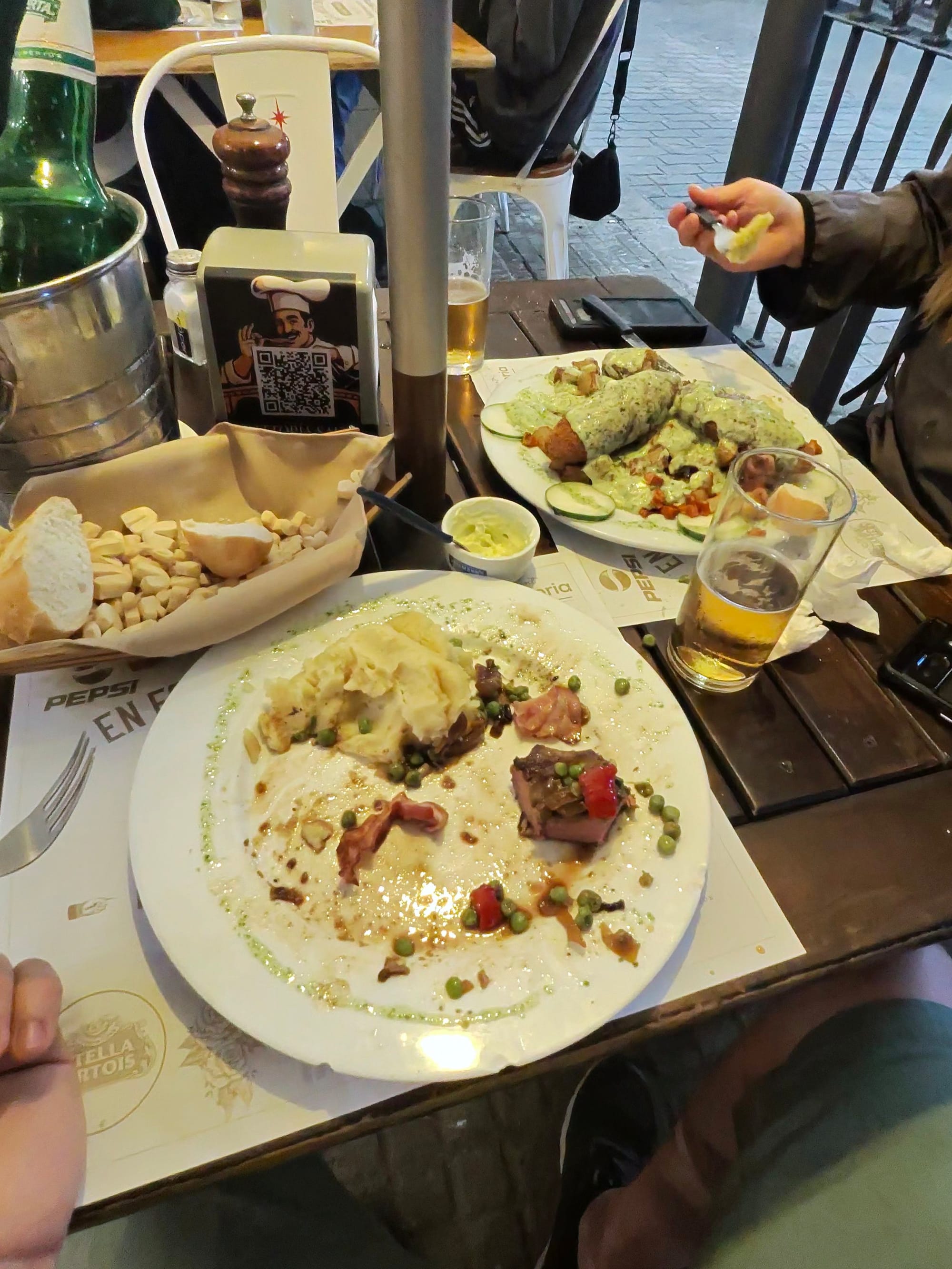
Salto isn't on the standard tourist circuit, which is half the point. The pace is slower, the prices are kinder, and the bar staff don't switch to English at the first hint of an accent. By the time the second plate lands across the table — another full milanesa, a beer poured fresh into a chilled glass — you've quietly settled into a different time zone.
The Rough Guide tips for Salto: - Order the chicken milanesa and the steak criollo side by side. They're the two reference points of casual Uruguayan dining, and Salto is a great place to try them without paying Punta del Este prices. - Don't fill up on the bread bits. They're a trap.
Colonia del Sacramento, Uruguay: Where to Eat Chivito Al Plato (and Drink Bizarra)
Colonia is the kind of place that does golden hour for a living. The cobblestones glow, the lighthouse leans into the light, and somebody on every corner is pouring something cold. We started with a Bizarra — one of the small Uruguayan craft breweries that's been quietly making the case that this country deserves more than just Pilsen and Patricia on tap.
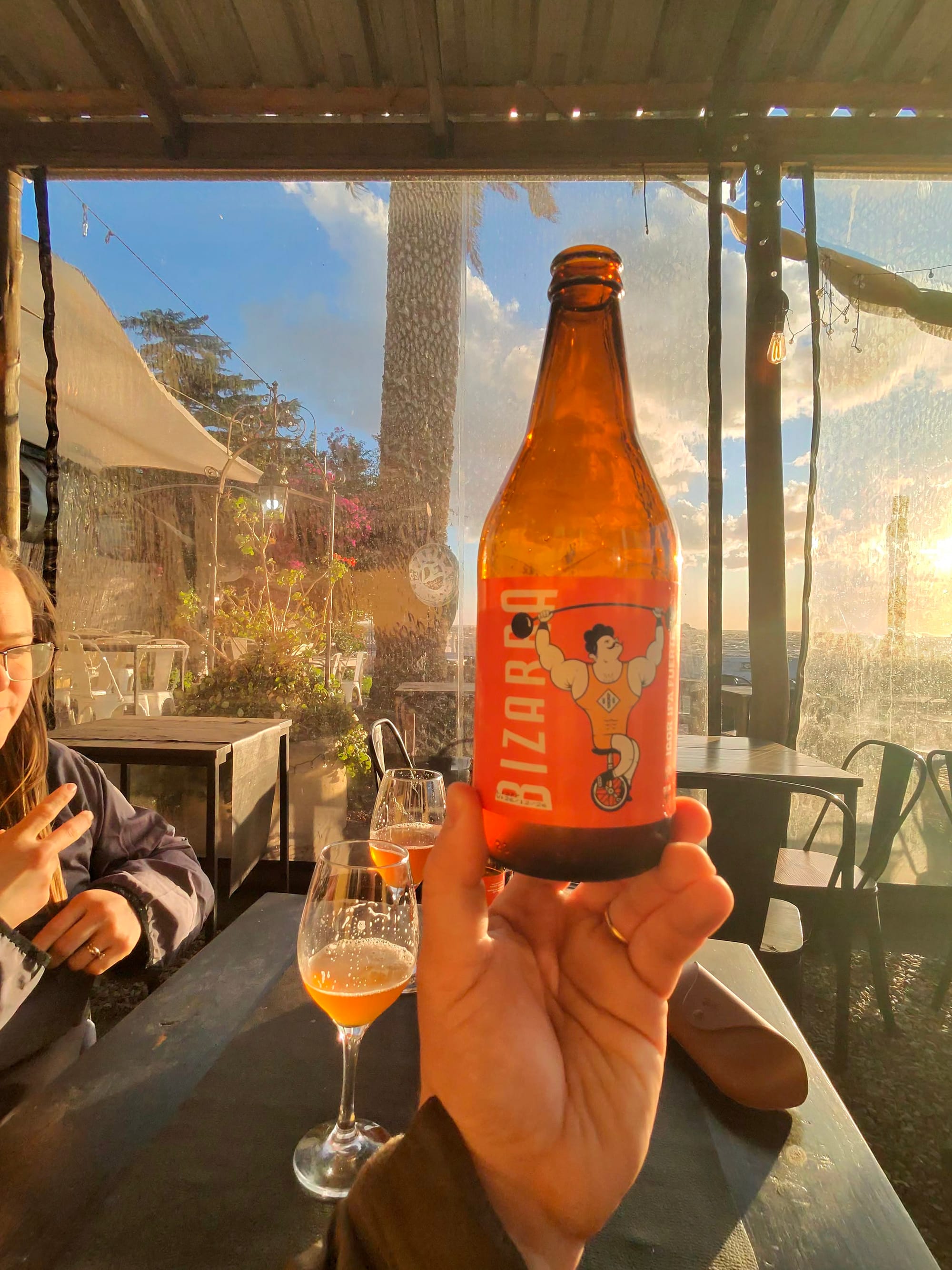
The glass in the foreground is half-poured, the sun is doing exactly what you want a sun to do, and somebody at the next table over is laughing at something you can't quite hear. This is the part of the trip you don't photograph well. You drink it.
Chivito Al Plato: The National Dish of Uruguay
Then dinner. If you ask a Uruguayan what to eat, eventually — usually within ten seconds — they'll say chivito. It's the national sandwich, technically. But the more honest version is the chivito al plato: same ingredients, no bread, all the gravitational pull.
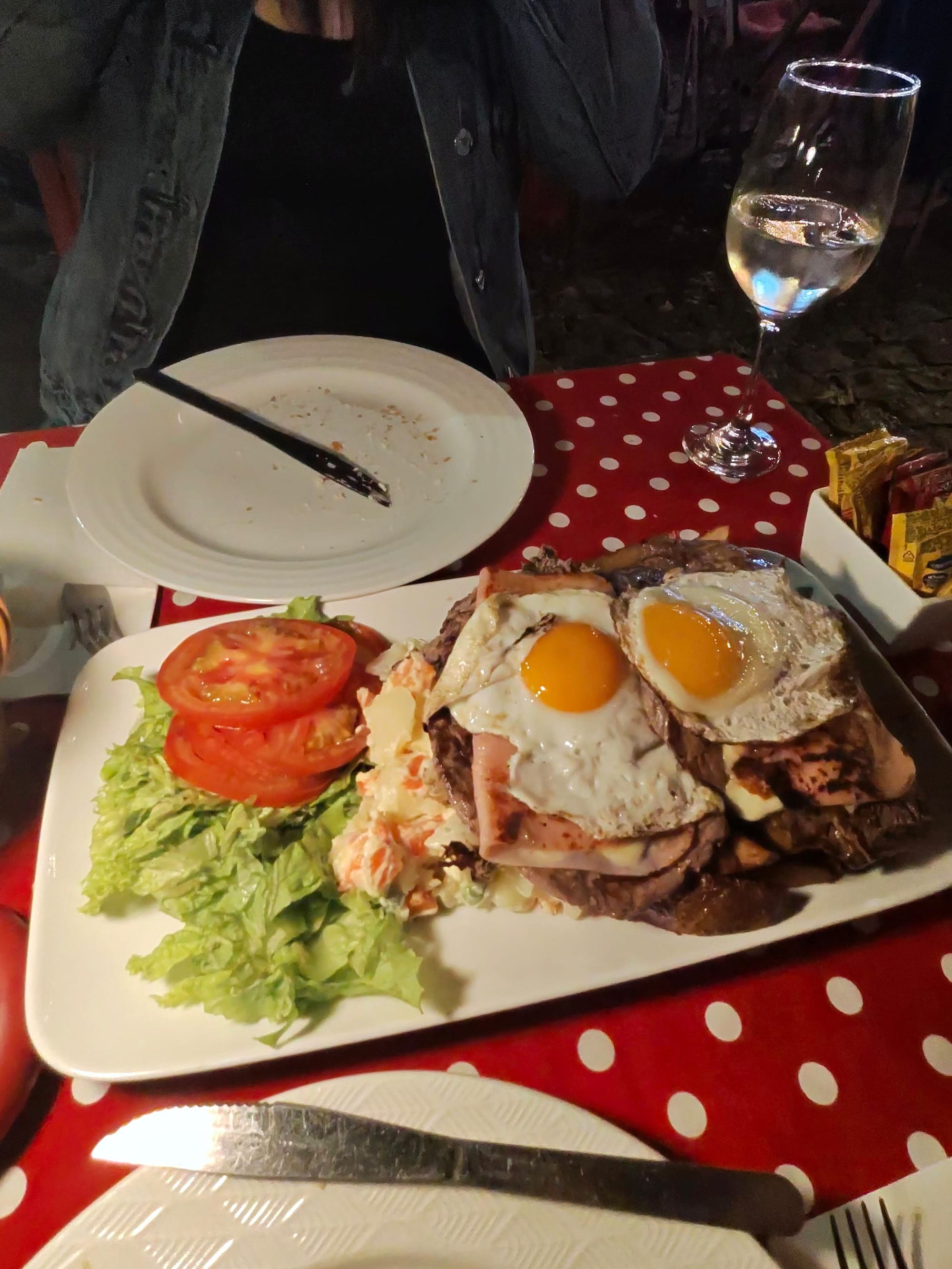
You get a plate built like an archaeological dig: a foundation of steak, a sediment of ham and melted cheese, a topsoil of two fried eggs, with tomato and lettuce around the edges to give your conscience something to point at. There's a glass of crisp white wine within reach, because someone in the kitchen understood balance.
The Chivito, Disassembled
A few bites in, the table did what the table always ends up doing with a chivito al plato — broke it down. The steak got moved onto its own plate, a fried egg riding on top for company, while the lettuce, tomato, potatoes, and the rest of the toppings stayed on the original platter.
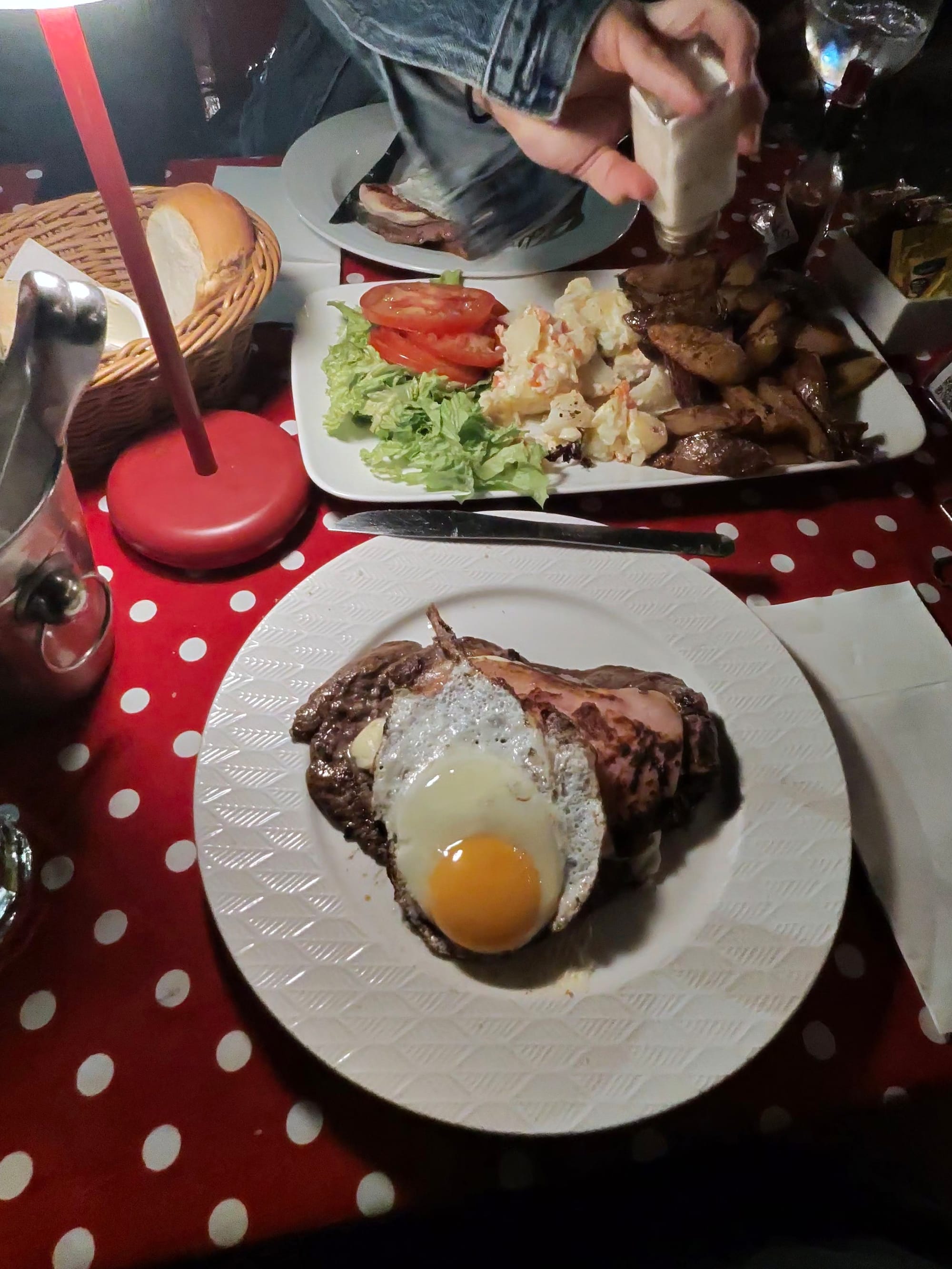
It's the same dish, just spread across two plates so each component gets a clean shot at your attention. By the time both plates are cleared, the cobblestone street outside Colonia's old town has gone soft and orange, and you understand why people retire here.
The Rough Guide tips for eating in Colonia: - Order the chivito al plato, not in the sandwich. You came this far — don't hide the architecture under bread. - If you see a local craft tap list, ignore the imports. Bizarra is the call.
La Boca, Buenos Aires: An Argentine Asado at the Table
A ferry across the brown, restless Río de la Plata drops you in Buenos Aires, and within an hour, you should be sitting in front of an asado. The version we landed at sat in the middle of a long blue-tablecloth restaurant in La Boca — the kind of place that puts a painting of a tango couple on the wall and means it.
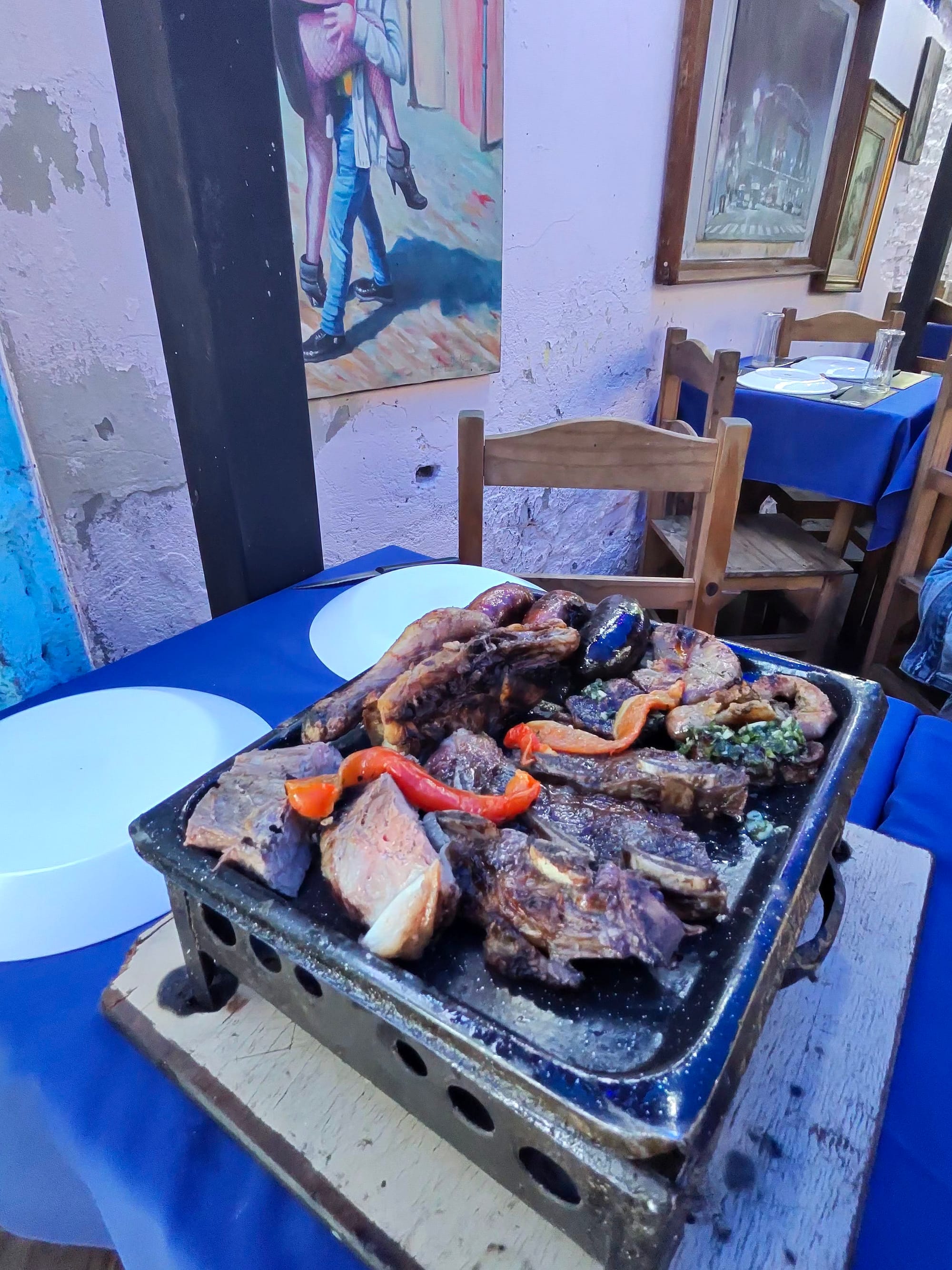
The waiter brings a small cast-iron grill loaded with:
- Tira de asado — short ribs cut across the bone, the heart of an Argentine asado.
- Chorizo — pork sausage, served first and eaten in the traditional choripán if you're at a parrilla and want bread.
- Morcilla — blood sausage, soft and rich, polarizing on purpose.
- Charred red peppers — for the table conscience.
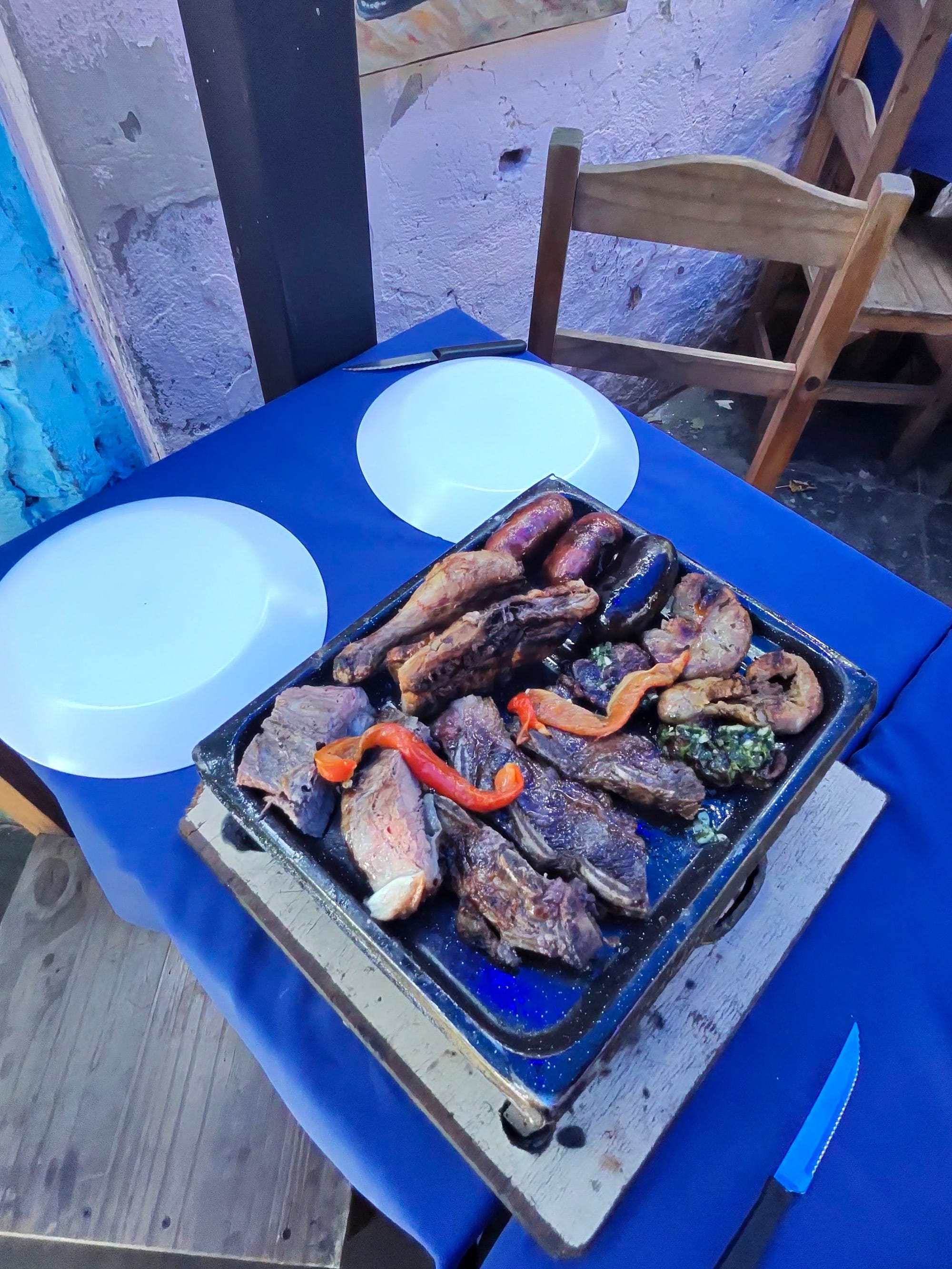
The grill keeps cooking after it lands. That's the whole trick. You eat the first cut hot off the embers; by the time you reach the morcilla at the far edge, it's exactly where you'd want it.
Buenos Aires Craft Beer: Beyond Quilmes
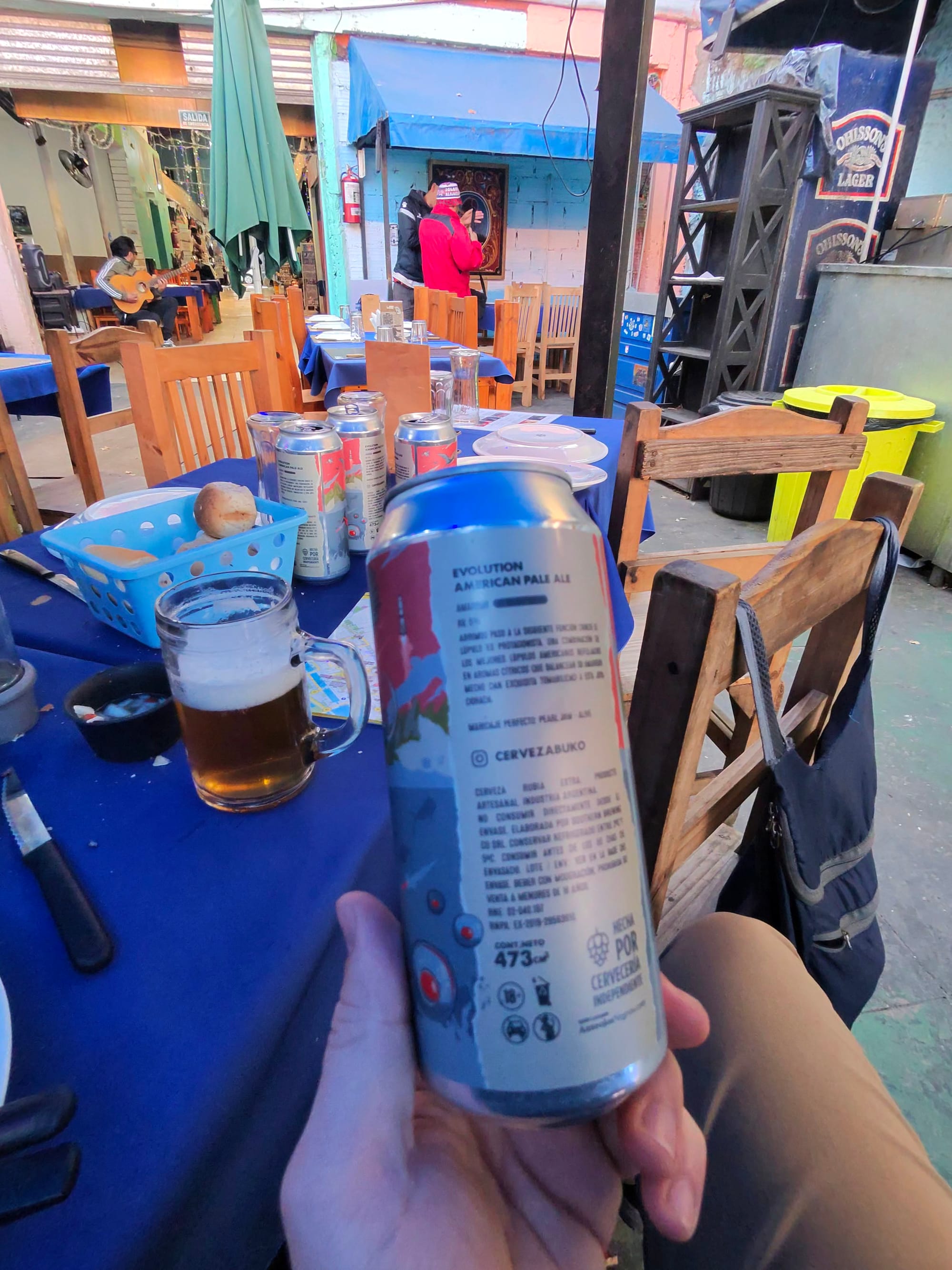
You wash it down with something cold. The classic call is a Quilmes; the better call, increasingly, is whatever the local craft taprooms have on. We worked our way through a 473 ml can of Evolution American Pale Ale — citrus-forward, ABV in the polite zone, easy enough to keep up with a four-hour lunch.
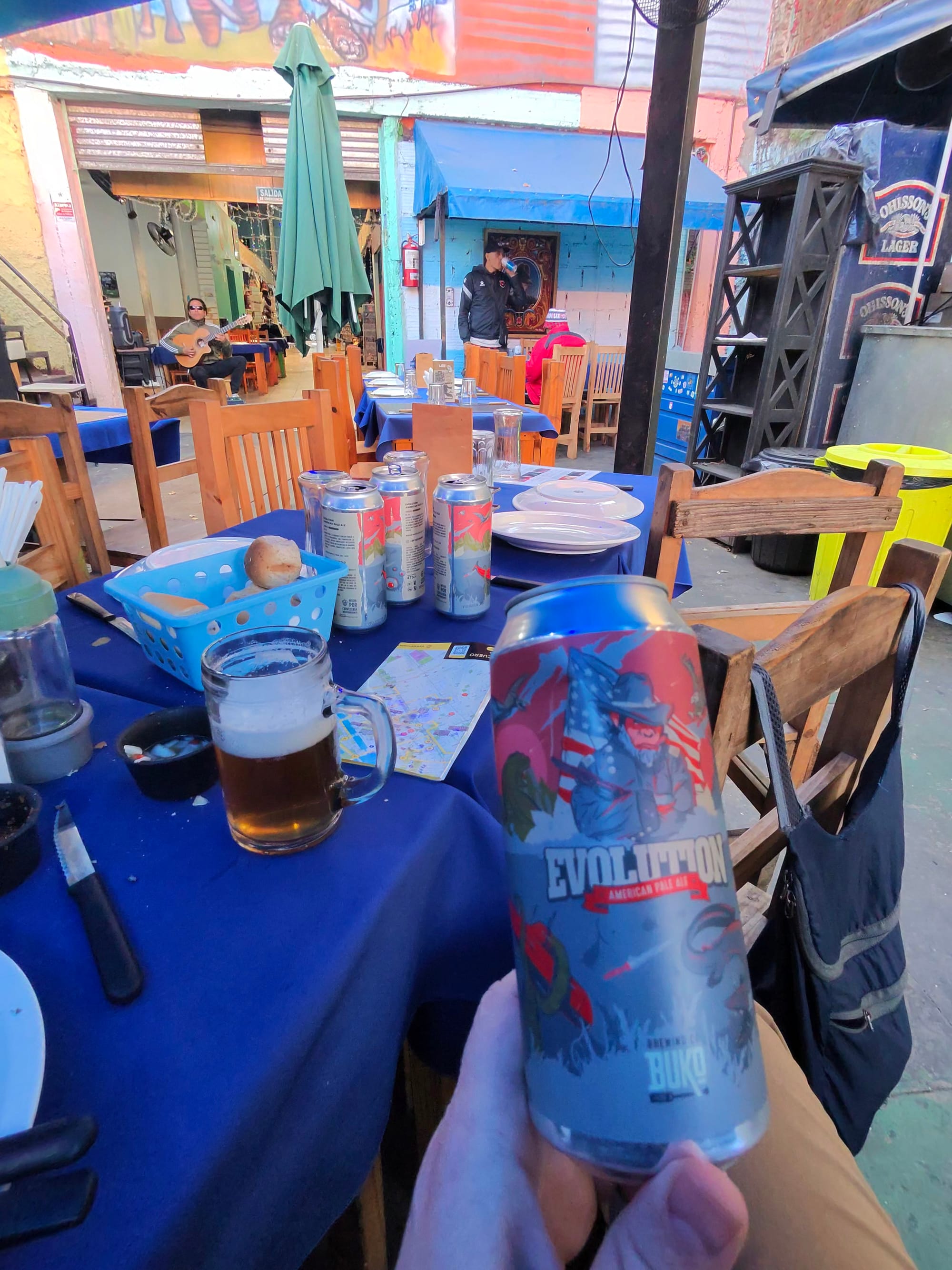
The label on the back is a small love letter to malt and hops. Read it if you read labels. Don't if you don't.
The Rough Guide tip: Sit outside if you can. The grill smells the same indoors, but the conversation is twice as good on the sidewalk.
Montevideo, Uruguay: Last Lunch at La Palenque (Mercado del Puerto)
By the final day you're back across the water in Montevideo, andthe meal becomes a kind of farewell speech. The destination is La Palenque — the parrilla you go to when you want the trip to end on the right note, with sawdust on the floor, wood-and-glass doors, and a champagne bucket no one asked for but everybody approves of.
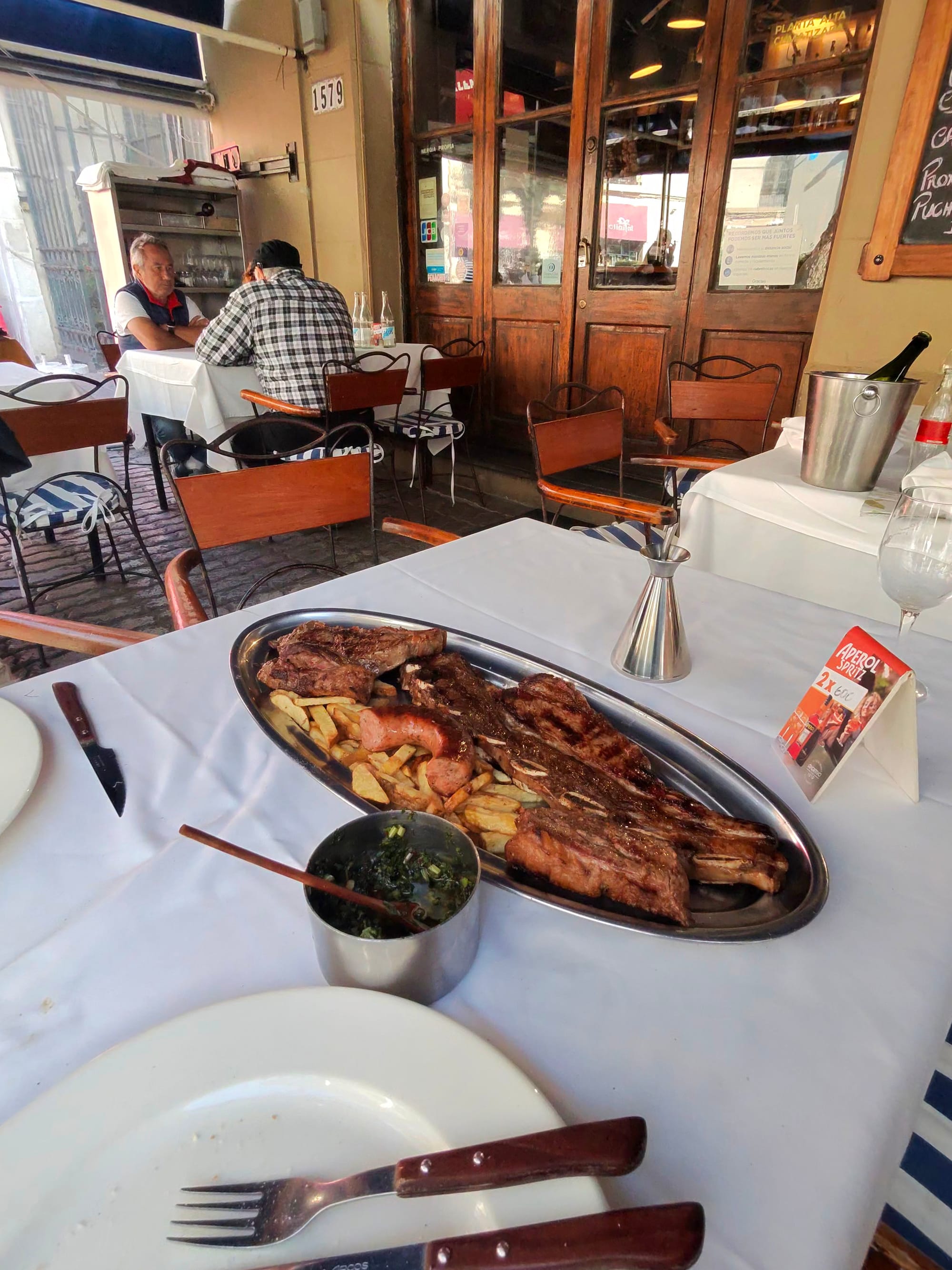
It comes out as one enormous silver oval — a sampler of everything the week had hinted at, set down like an offering. Ribs, sausage, a slab of steak, fries to mop up the juice, and a small pot of chimichurri that the table treats with the seriousness of a sacrament.
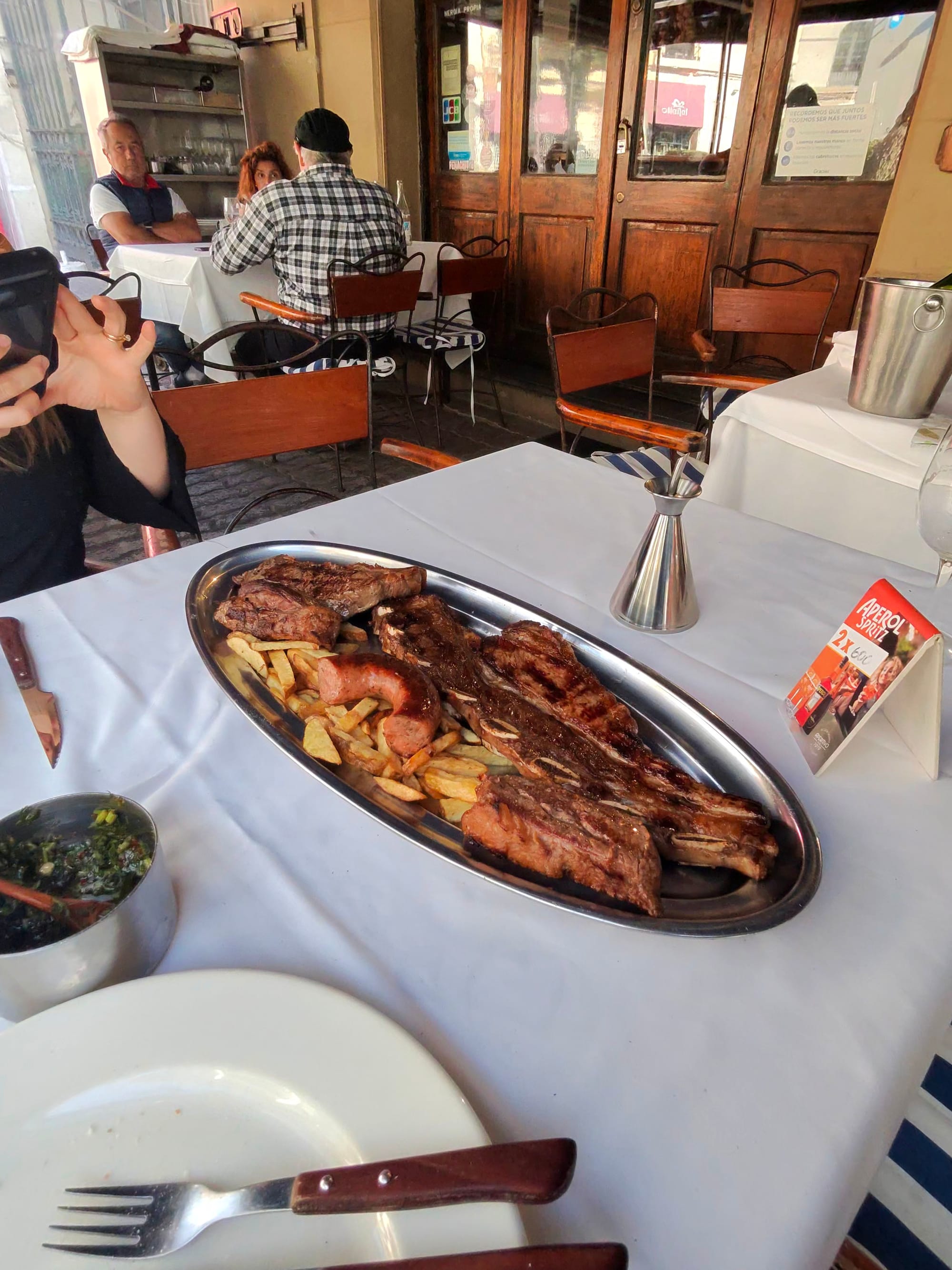
You finish slowly. You order another coffee. You realize, with mild alarm, that you've been at the table for three hours and are about to be at it for one more.
The Rough Guide tip: Chimichurri is not a dipping sauce. It's a co-pilot. Use it on everything that touched fire.
Frequently Asked Questions
What is chivito al plato?
Chivito al plato is the plated version of Uruguay's national dish: a layered stack of steak, ham, melted cheese, fried eggs, tomato, and lettuce, served on a plate instead of in a sandwich. It's typically eaten as a full meal with white wine or beer.
What is steak criollo (bistec a la criolla)?
Steak criollo, or bistec a la criolla, is a classic Uruguayan and Argentine home-style dish: a thin cut of beef cooked in salsa criolla — a slow-simmered mix of tomato, onion, bell pepper, garlic, and sometimes a splash of wine. It's everyday comfort food rather than a special-occasion dish, usually served with rice, potatoes, or peas.
What is chicken milanesa?
Chicken milanesa (milanesa de pollo) is a thin chicken breast cutlet that's been pounded out, breaded in seasoned crumbs, and pan-fried until crisp. It's one of the most-ordered dishes in Uruguay and Argentina, often served with mashed potatoes, fries, or a fried egg on top (milanesa a caballo). Beef milanesa (milanesa de carne) is equally common.
How is chivito al plato different from a chivito sandwich?
The ingredients are identical. The chivito sandwich tucks the stack between two halves of a soft bread roll; the chivito al plato removes the bread entirely so the meat, eggs, and toppings sit openly on the plate. Most travelers find the al plato version more photogenic and easier to eat without dismantling.
What's in a traditional Argentine asado?
A classic asado typically includes tira de asado (short ribs), chorizo (pork sausage), morcilla (blood sausage), and sometimes vacío (flank), mollejas (sweetbreads), or provoleta (grilled provolone). It's served slowly over hot coals, often on a tabletop cast-iron grill at restaurants in La Boca and other Buenos Aires neighborhoods.
What is parrillada vs. asado?
Asado refers to the cooking method and the overall meal of grilled meats. Parrillada specifically refers to the mixed-grill platter — a single dish that brings out a sampler of cuts (ribs, chorizo, steak, sometimes offal) for the table to share. In Montevideo, the parrillada is the star of Mercado del Puerto restaurants like La Palenque.
What's the best craft beer in Uruguay?
Bizarra is one of the standout Uruguayan craft breweries and a reliable order in Colonia del Sacramento and Montevideo. Other names worth trying include Mastra, Davok, and Cabesas Bier. Most touristy bars now carry at least one local craft option alongside Pilsen and Patricia.
Where can I eat parrillada in Montevideo?
The traditional destination is Mercado del Puerto — a covered market filled with parrillas where the smoke from the grills is part of the atmosphere. La Palenque is one of the best-known spots inside the market for a full parrillada platter.
Is Salto worth visiting for food?
Salto, Uruguay, isn't on most food itineraries — which is the point. The casual restaurant culture is unhurried, prices are gentler than in Montevideo or Punta del Este, and you'll be eating with locals rather than tourists. It's an ideal place to try everyday Uruguayan staples like chicken milanesa and steak criollo without the markups of the resort towns.
How long should I spend in each city for the food?
A workable week: 1 day Salto, 1 day Colonia del Sacramento, 2 days Buenos Aires, 2 days Montevideo, plus travel buffer. That gives you at least one major meal per stop without rushing.
What Sticks: Three Takeaways
Three things travel home with you from a week between Salto and Buenos Aires, even if your suitcase doesn't have room for them:
- Fire is patient. A Uruguayan or Argentine grill doesn't rush. Neither should you.
- The chivito al plato wins. The sandwich is fine. The plate is the truth.
- Beer has caught up. Don't sleep on the local craft scene — Bizarra in Uruguay, the Buenos Aires APA crowd across the river. The big lagers are still around. They're just no longer the only call.
The meat stays with you for a few days. The pace stays with you longer. That's the real souvenir.
Planning your own trip? Bookmark this Uruguay and Argentina food guide and share it with the friend you're convincing to come along.
— The Rough Guide